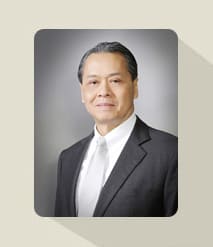
Honorary Citation for Mr. Banthoon Lamsam Doctorate of Pharmacy, honoris causa Academic Year 2024
Mr. Banthoon Lamsam serves as Honorary Chairman of Kasikornbank and Vice Chair of the Rakpa Nan Foundation under the Royal Patronage of Her Royal Highness Princess Maha Chakri Sirindhorn. He graduated with a Bachelor of Engineering (Chemical Engineering) from Princeton University and a Master of Business Administration (MBA) from Harvard University. As a former Chief Executive Officer and Chairman of Kasikornbank, he initiated the application of reengineering principles to work system improvement, resulting in the bank overcoming the economic crisis in 1997 without relying on the Government, and also laid the foundation for national digital finance. These systemic experiences fostered a disciplined mindset in standards and the effective design of complex processes, which were subsequently and continuously carried forward into works in public health and pharmacy.
Developing health systems and the pharmaceutical industry to address modern challenges requires leaders who can see the “big picture and linkage,” by integrating multidisciplinary knowledge with management under international standards. Mr. Banthoon Lamsam has evidently demonstrated this role by designing the “Thailand’s Plant-derived Drug Development Ecosystem,” to be based on scientific evidence and contemporary quality assurance systems to truly generate tangible outcomes in the health systems, the biobased economy, and local communities.
Considering the contemporary problems on health, community, and environment, Mr. Banthoon Lumsum decided to concretely develop the health systems in Nan and Phrae provinces by promoting the advancement of Nan Hospital (Rattanananthawet Medical Center) to be a model “Resilient Hospital” that was prepared for responding to and recovering from crises and capable of responding infectious disease outbreaks and disasters. Concurrently, he supported the development of Smart Provincial Hospital that was driven by information technologies to integrate and manage patient care data systematically and with quality. Also, he initiated the construction of standard residential facilities for healthcare professionals in Nan and Phrae provinces, reflecting his understanding that healthcare professionals were the core of the health system and enhancing their quality of life and morale were recognized as a key condition for sustainability.
Due to the watershed problem and its impact on local health, Mr. Banthoon Lamsam initiated the “Nan Sandbox” project to enhance the quality of life including health, education, and income, alongside ecosystem restoration. He also established a new economic structure based on biodiversity by developing the “Medicine Forest” project, which comprehensively organized a value chain for plant-derived drugs and introduced non-timber forest products (NTFP) into the health service systems to strengthen the nation’s drug security, reduce dependence on imports and chemical precursors, generate bioeconomic value for communities, relieve pressure on forest encroachment, as well as advance Thailand’s pharmaceutical industry and the National health systems, entirely.
The development of innovation value chain involves organizing and improving working through the application of science. At the “upstream” level, the Pharma-Agroforestry District at Rajamangala University of Technology Lanna, Nan province, was promoted to connect upstream researchers from various partnership universities and research centers nationwide, Sireeruckhachati Nature Learning Park, for example. Also, Lanna drug recipes were reintepreted with modern pharmaceutical science, and standards for species selection, planting, and harvesting were established. Lastly, medical plant plantation in Agroforestry systems was promoted to ensure that a chemical feedstock having major ingredients was consistently and adequately produced for the next process.
The “midstream” level is a key to the development. Mr. Banthoon Lamsam thereby supported the construction of prototype active ingredient extraction units at Rajamangala University of Technology Lanna, Nan province, to process easy perishable agricultural products into standardized extract for drug development. He also established standards for extraction producing reference standards alongside quality control and assurance systems (QC/QA). To ensure a smooth progress of the value chain, he supported the establishment and elevation of Center of Excellence for Pharmaceutical Training Operating and Practice (PharmTOP) at the Department of Pharmacy, Mahidol University to be a model under international standards. The Center is a bridge between a laboratory and a production line under GMP and PIC/S standards and applies the modern medicine’s quality system with plant-derived drugs including a production line and also develops and designs processes that can be repeated systematically and have capabilities in increasing the scale of operations. It serves as a source where the industry can learn from prior to expansion for commercial purposes and as a center for personnel training in research, quality, and process engineering. The Center also oversees and monitors to ensure that the “upstream, midstream, and downstream” levels are integrated into a single system from the forest to the hospital, allowing research findings to reach both the “production line” and the “hospital bed.”
Once reference standard and reliable production processes are established, then it moves to the “downstream” level—gaining acceptance from physicians through clinical studies. Mr. Banthoon Lamsam formed collaborations with the Faculty of Medicine of Siriraj Hospital, the Faculty of Medicine of Ramathibodi Hospital, the Faculty of Medicine of Chulalongkorn University, the Faculty of Medicine of Chiang Mai University, the Faculty of Medicine of Khon Kaen University, and the Faculty of Medicine of Naresuan University to conduct a systematic clinical trial on plant-derived drugs. This resulted in the acceptance and actual use in medical practices, as well as six plant-derived drug registrations, with one being included in the National List of Essential Medicines. It indicates the advancement from “plant-derived products” to “high-standard plant-derived drugs that physicians practically prescribe.”
The systemic outcomes are therefore apparent as follows: the increase of alternatives for medicines which are clinically evidence-based and accessible, the establishment of a value chain of plant-derived drugs domestically produced which strengthens drug security and reduces dependence on imports and chemical precursors, the link of research with industry to create added value from raw materials through to production, stable income generation for farmers, the ease of forest encroachment pressure, and the establishment of groundwork for a workforce capable of driving Thailand’s pharmaceutical industry. These align with the concept of Planetary Health, which integrates human health with ecosystem health and the global environment, as well as the sustainable management of natural resources.
With his academic background and firm career, provable systematic thinking method, and dedication to foster “Thailand’s plant-derived drug biosystem” to comply with international standards and support the Nation’s drug security, Mr. Banthoon Lamsam has thereby become a leader who concretely reshapes Thailand’s pharmaceutical industry structure and health systems. His works are consistent with the mission of Mahidol University in advancing medical and pharmaceutical standards for the health of the Thai people while addressing global challenges.
The Mahidol University Council, at its 616th meeting on Wednesday, 21st May 2025, unanimously resolved that a Doctorate of Pharmacy, honoris causa be conferred on Mr. Banthoon Lamsam, for his highest recognition and as an example for the development of the country based on science, standards, and sustainability.